Thinking about a remodel, pool, or new addition in Malibu? The coastal permit rules can surprise even seasoned owners. This guide shows you when you need a Coastal Development Permit, how the review works, realistic timelines, and the design choices that make approvals more likely. Let’s dive in.
What a coastal permit covers in Malibu
In Malibu, most development near the coast is regulated under the California Coastal Act. The City of Malibu uses its Local Coastal Program to review projects and issue most Coastal Development Permits. Some approvals can be appealed to the California Coastal Commission, especially for bluff-top, oceanfront, or public access projects. Knowing whether the City or the Commission may become involved helps you plan your schedule and team.
You also want to confirm where your property sits. Parcels inside City of Malibu limits follow the City’s certified Local Coastal Program, while unincorporated Los Angeles County properties follow a different process. Overlays like environmentally sensitive habitat areas, bluff hazards, wetlands, and archaeological resources can change what is allowed and how long it takes.
Do you need a CDP? Common triggers
A “development” under the Coastal Act is broad. Many projects that seem routine still need a permit.
Typical Malibu projects that often require a CDP:
- New primary residences or major additions that expand the building envelope or add a second story.
- Pools, spas, and large hardscape near bluff edges or public access routes.
- Grading, terraces, or retaining walls on coastal bluffs or steeper slopes.
- Shoreline protection such as seawalls or revetments, which are highly restricted.
- Substantial demolition and reconstruction, especially if footprint or use changes.
- Work in or near environmentally sensitive habitat areas.
- Projects that affect public access such as beach stairways, parking, or driveways.
- Changes to septic or drainage systems that could affect coastal waters.
Projects that might not need a CDP, depending on site context:
- Interior-only remodels that do not change the exterior envelope, footprint, or grading. If the site is in an appealable area, hazard zone, or near habitat, review may still be required.
- Minor repairs and maintenance that do not expand development. The definition of “minor” is specific, so confirm details before you start.
- Emergency work to protect life or property can be authorized on a short-term basis, with follow-up permitting typically required.
Key takeaway: Whether you need a coastal permit depends on the exact scope and the site. Confirm early with City of Malibu planning staff before you finalize design or schedule contractors.
How the review process works
Pre-application and site review
Start with a pre-application meeting with City planning staff. They will flag setbacks, habitat areas, hazards, prior permits, and whether a project is likely appealable. This is the best time to test concepts and adjust the plan before you invest in full drawings.
Application and completeness check
You will assemble plans, technical studies, and application forms. Planning staff will determine if the submittal is complete. Incomplete packages pause review, so a thorough first submission saves time.
Public notice and staff analysis
Once complete, the City issues notice and begins its policy analysis. Staff will review your plans for consistency with the Local Coastal Program and the Coastal Act. They may ask for revisions or additional mitigation measures.
Decision and hearings
Some minor projects can be approved administratively. Larger or discretionary projects typically go to the Planning Commission, and in some cases to the City Council. Approvals often include conditions that shape the final design and construction approach.
Appeal period and potential Commission review
Many coastal approvals have an appeal window. For certain locations and project types, decisions can be appealed to the California Coastal Commission. A Commission appeal can add several months to your schedule.
Permit issuance and next steps
After the approval and appeal period, the permit is issued with conditions. You may need to record deed restrictions or set up monitoring before you can pull building permits. Most permits include a start-by deadline and an expiration timeframe.
Typical Malibu timelines:
- Minor administrative projects: about 1 to 3 months.
- One hearing with staff review: about 3 to 6 months.
- Major projects with complex issues or multiple studies: about 6 to 18 months or more.
- If appealed to the Commission: add about 3 to 9 months.
Delays are common if studies are incomplete, the site involves habitat or bluff hazards, there is prior unpermitted work, or if public access or shoreline protection is involved.
Design choices that speed approvals
Your design choices have a direct impact on permit feasibility and review time.
Key Malibu constraints:
- Bluff and shoreline setbacks: Structures, pools, and hardscape near bluff edges face strict setbacks. New shoreline armoring is disfavored and often limited.
- Height, bulk, and views: Lower profiles, stepped massing, and visually recessive materials reduce public view impacts.
- Lot coverage and hardscape: High impervious area raises drainage concerns. Expect scrutiny of grading and paving.
- Environmentally sensitive habitat: Avoidance, buffers, and mitigation may be required near habitat. Some areas may be off-limits for development.
- Hydrology and drainage: Projects must prevent increased runoff to coastal waters and often need on-site retention and biofiltration.
- Public access: Any element that diminishes coastal access can face conditions or denial.
- Sea level rise and shoreline armoring: Policies prioritize designs that avoid new armoring and plan for long-term resilience.
Design strategies that help:
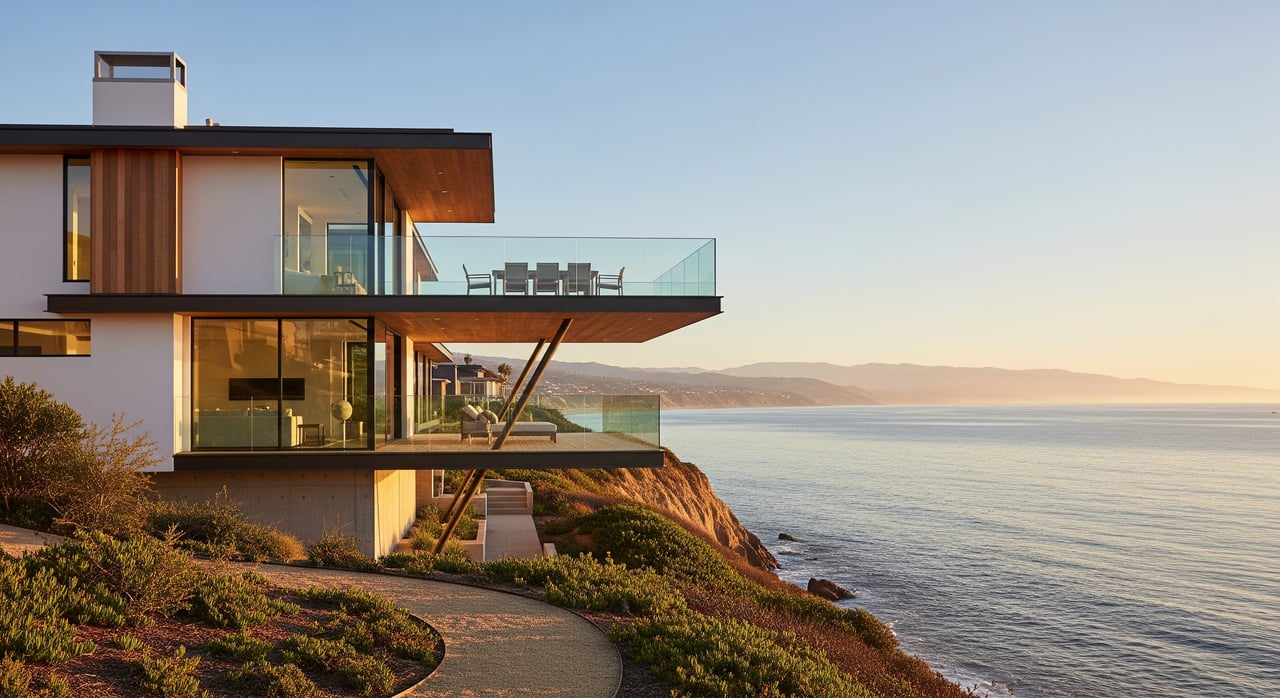
- Minimize footprint and grading. Use split levels or cantilevers on sloped sites.
- Keep improvements well landward of bluff setbacks. Avoid edge-of-bluff placement.
- Use low-profile forms, natural colors, and landscaping to reduce visibility.
- Increase permeable surfaces and add low-impact stormwater measures.
- Consider alternate pool concepts or locations away from bluff edges.
- For replacements, stay within documented historic footprints where feasible.
- Design with future sea level rise in mind instead of relying on new hard protection.
Technical reports and your team
Expect to provide clear plans and specialized studies that address Malibu’s coastal standards.
Typical submittal materials:
- Site plan, floor plans, elevations, roof plan, and sections showing existing and proposed grades.
- Topographic and boundary survey.
- Geotechnical and coastal hazard report with bluff stability and setback recommendations.
- Biological resources assessment with habitat mapping and mitigation if needed.
- Archaeological and cultural resources review where grading may uncover materials.
- Drainage and stormwater plan with on-site retention and best practices.
- Landscaping plan using native and drought-tolerant species.
- Visual impact analysis if the project may affect public views or scenic corridors.
- Construction staging and access plan, especially if roads or beaches could be affected.
- Demolition and hazardous materials plan when applicable.
- Septic and sewer compliance documentation if systems are modified.
Professionals who often add value:
- Architect or designer experienced with coastal rules.
- Coastal planner or permit specialist to coordinate with the City and, if needed, the Commission.
- Geotechnical and soils engineer with bluff expertise.
- Biologist familiar with Malibu habitat and mitigation standards.
- Civil engineer for grading and drainage design.
- Archaeologist or cultural resources specialist if required.
- Surveyor and landscape architect.
- Attorney with coastal permitting experience for complex or appealed cases.
Red flags and typical conditions
Common approval conditions:
- Limits on size, height, or siting to protect views and reduce hazards.
- Mandatory bluff setbacks and geotechnical monitoring.
- Restrictions on shoreline armoring and removal or mitigation requirements if allowed.
- Habitat mitigation, planting schedules, and construction monitoring.
- Public access easements or improvements where applicable.
- Deed restrictions recorded against title and indemnification conditions.
Frequent red flags that can slow or derail approvals:
Encroachment into habitat, such as removal of native coastal scrub or dunes.
Requests for new or expanded shoreline protection.
Any reduction in coastal access.
Unpermitted work or unresolved enforcement on the property.
Insufficient geotechnical evidence on bluff stability or erosion rates.
Significant increases in impervious area without stormwater mitigation.
If unpermitted work has occurred, agencies can require restoration and after-the-fact permits, which face tougher review and potential penalties.
A practical Malibu game plan
Pre-application steps:
- Confirm jurisdiction and overlays. Verify if you are within City of Malibu limits and identify bluff setbacks, habitat areas, and hazard zones.
- Pull parcel records. Review prior permits, recorded conditions, and any past enforcement.
- Schedule a pre-application meeting with City planning staff to test concepts and clarify requirements.
- Engage a coastal-savvy architect and, for bluff or habitat sites, a permit specialist early.
Minimum application checklist:
- Complete CDP application and fees.
- Survey, site plan, floor plans, elevations, and sections.
- Geotechnical report for structural work or grading, especially near bluffs.
- Biological resources letter or full report as needed.
- Drainage and stormwater plan.
- Photo documentation and visual simulations for view-sensitive locations.
- Construction staging and parking plan.
Suggested sequencing:
- Pre-application and conceptual design with your architect.
- Early geotechnical and biological reconnaissance to set constraints.
- Refined plans that avoid bluff edges and reduce hardscape.
- Full application with technical reports.
- Response to staff comments and preparation for a hearing if required.
Budget and schedule mindset:
- Plan for months, not weeks. Even modest projects can take a full quarter to clear. Complex sites often take longer.
- Include consultant costs and potential mitigation or landscape work in your budget.
- Expect conditions and build them into your construction plan.
How this impacts buying and selling
If you plan to sell, a clear permit history and feasible upgrade path can increase buyer confidence and value. Consider addressing unpermitted work, confirming past approvals, and documenting what future improvements the site can support. Strategic, permit-ready design concepts often help listings stand out.
If you are buying, evaluate the site’s constraints early. Ask about bluff setbacks, habitat proximity, drainage, and prior coastal permits. If you intend to add a pool, a second story, or expand the footprint, verify likely permit needs and timelines before you close.
A real estate team fluent in Malibu’s coastal rules can help you frame the right due diligence, connect you with the right consultants, and set expectations on timing and cost so you make confident decisions.
Ready to map your plan with a calm, seasoned guide? Connect with Isabelle Mizrahi and Coleman Eisner for a confidential consultation tailored to your Malibu goals.
FAQs
Do I need a Coastal Development Permit for a Malibu pool?
- Pools near bluffs, in hazard zones, or that require grading typically trigger a CDP, while well-sited pools away from sensitive areas may have a simpler path.
How long does a Malibu coastal permit usually take?
- Minor administrative approvals can take 1 to 3 months, single-hearing projects often take 3 to 6 months, and complex or appealed projects can take 6 to 18 months or more.
Can I build a seawall to protect my Malibu bluff home?
- New shoreline armoring is heavily restricted and often allowed only when no reasonable alternative exists for an existing principal structure, with strict mitigation and conditions.
Will an interior remodel in Malibu need a coastal permit?
- Purely interior work that does not change the exterior envelope, footprint, or grading often does not need a CDP, but site context and location can change that.
Who should I contact first about permits in Malibu?
- Start with the City of Malibu Planning Department for a pre-application review, then engage coastal-savvy consultants to shape a feasible plan.
What happens if previous work was done without a coastal permit?
- Agencies can require after-the-fact permits, site restoration, and potential fines, and those permits face closer scrutiny than standard applications.