Thinking about adding space or rental income without leaving your Venice home? An accessory dwelling unit can be a smart way to create flexibility, multigenerational living, or steady long-term rent. Venice has unique layers of rules because much of the neighborhood sits in the Coastal Zone, so planning well is key. In this guide, you’ll learn how ADUs work in Los Angeles, what is different in Venice, and the steps to move from idea to permit with fewer surprises. Let’s dive in.
ADU basics in Los Angeles
An accessory dwelling unit is a secondary housing unit on a lot with a primary home. California law allows attached and detached ADUs, along with junior ADUs inside the existing home. State law caps most new ADUs at up to 1,200 square feet and JADUs at up to 500 square feet.
Many ADUs qualify for ministerial approval, which means a faster, non-discretionary review if your plans meet the rules. For state-level guidance, review the California Department of Housing and Community Development’s ADU overview on the state ADU guidance page. For local zoning and process details, start with the City of Los Angeles Department of City Planning and the Los Angeles Department of Building and Safety.
Why Venice is different
Venice is compact and mostly within the Coastal Zone. Lots are often narrow with small rear yards and alley access, which affects what you can build and where. These site conditions often make conversions of existing space and JADUs more practical than a new detached structure.
Local zoning controls still apply to height, setbacks, and lot coverage, even with state ADU protections in place. Check your parcel’s zoning, any overlays, and Coastal Zone status using the City’s ZIMAS parcel lookup. This early check helps you avoid designs that cannot be approved.
Choosing the right ADU type
Picking the ADU type early will shape your budget, timeline, and approvals.
- Conversion ADU or JADU: Converting existing interior space or an existing garage often avoids new setbacks and can reduce costs and time. JADUs are limited to 500 square feet and must be within the existing home.
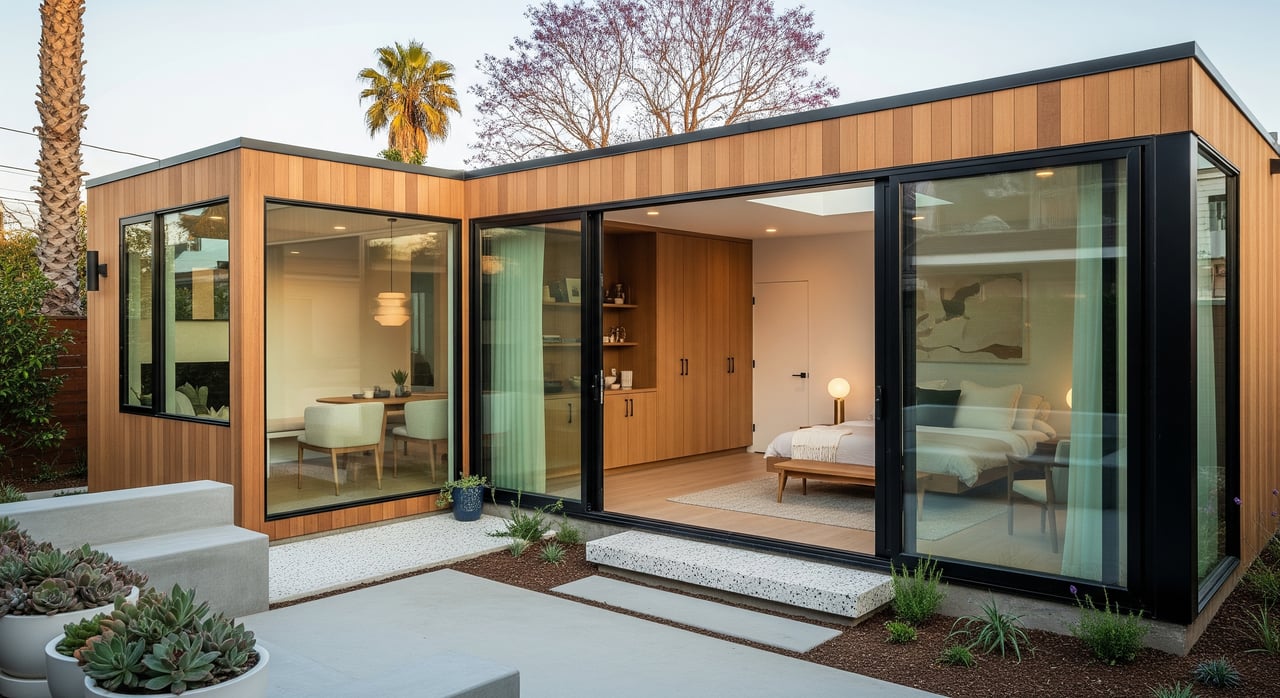
- Detached ADU: Offers the most privacy but needs adequate yard area and must respect setbacks, height, and lot coverage limits. Small Venice lots make detached ADUs possible but design-sensitive.
If your lot is tight or oddly shaped, start by exploring a garage conversion or interior JADU. If you have a usable rear yard, a detached ADU can still work with careful site planning.
Parking rules that matter in Venice
State law limits when cities can require ADU parking, especially near transit. In Venice, many homes are close to frequent transit or car-share, which can qualify for parking waivers. If you convert an existing garage into an ADU, replacement parking is generally not required.
Even if no parking is legally required, think about neighborhood parking conditions and alley access. Practical parking needs can affect your design choices and tenant appeal. Confirm parcel-specific determinations with City Planning and keep an eye on local programs that manage on-street parking.
Coastal Zone review and CDP triggers
In the Coastal Zone, some projects may need a Coastal Development Permit or a local coastal consistency review. Many ADUs are ministerial, but if your proposal requires variances or is in a sensitive coastal area, you could face added review, public notice, and potential appeals.
Plan to speak with a City coastal planner early to confirm if your proposal can proceed ministerially or if coastal review applies. For background, see the California Coastal Commission resources and coordinate with the City’s Coastal Review unit through City Planning.
Flooding, groundwater, and design
Venice’s low elevation brings real flood and groundwater considerations. Your ADU may need a raised foundation, flood-resistant materials, or utility placement changes to meet code and satisfy insurers. These choices can affect cost and schedule.
Review your property’s flood status on the FEMA Flood Map Service Center and discuss foundation and drainage strategies with your design team. Early awareness helps avoid redesigns during plan check.
Utilities, meters, and fees
ADUs increase demand on water, sewer, and electric systems. Expect capacity checks and possible upgrades.
- Water and electric: Contact the Los Angeles Department of Water & Power for service evaluations. Panel upgrades and new circuits can be major cost drivers.
- Sewer: The LA Bureau of Sanitation and LADBS will review sewer capacity and your lateral. Some projects require lateral replacement or new connection fees.
- Permits and impact fees: LADBS collects plan-check and permit fees. State law limits how impact fees apply to smaller ADUs, but you should still budget for utility connection costs. If a Coastal Development Permit is required, you will face additional application fees and timelines.
State law also limits when separate utility meters can be required, but each provider has operational rules. Do provider pre-checks so you understand the scope and cost before finalizing design.
The ADU permitting workflow
A clear process reduces surprises and rework. Here is a simple path you can follow in Venice:
- Research your parcel. Use ZIMAS to confirm zoning, overlays, and Coastal Zone status. Note any height limits, yard setbacks, or special areas. Check FEMA flood maps if applicable.
- Meet City Planning. Schedule a pre-application check with City Planning. If you are in the Coastal Zone, ask to speak with a coastal planner to flag ministerial vs discretionary triggers early.
- Concept and utility pre-checks. Work with a designer to sketch a concept. Contact LADWP and the Bureau of Sanitation to understand capacity, meter, and connection requirements.
- Prepare construction drawings. Submit full plans to LADBS for plan check. If coastal review is needed, submit those materials at the same time.
- Respond to comments. Expect plan-check comments and a revision round or two. Prompt responses keep you on track.
- Build and inspect. After permit issuance, LADBS will conduct inspections through completion, followed by final sign-off.
How long it takes
Timelines vary by scope and review path.
- Interior conversions and JADUs with ministerial approval can move through plan check and permits in several weeks to a few months, depending on plan completeness and agency workload.
- Detached ADUs on tight Venice lots, or any project that triggers coastal discretionary review, often run 6 to 12 months or more. Appeals or complex utility work can extend timelines.
Being complete and proactive during pre-checks is the fastest way to shorten your schedule.
What it may cost
Costs are driven by scope and site conditions.
- Conversions and JADUs tend to be the most cost effective, ranging from tens of thousands into the low six figures depending on systems and finish level.
- New detached ADUs on constrained coastal lots often land in the mid to high six figures. Foundations, utility runs, and site work add up.
- Budget for potential sewer and water upgrades, electrical panel increases, flood mitigation, and plan-check or coastal fees. Each of these can add several thousand to tens of thousands.
Your final budget depends on design choices and what your lot and utilities will allow.
Renting your ADU
You can generally rent ADUs long term. Short-term rental use in Los Angeles is tightly regulated and may include registration, owner-occupancy, or other limits. If you plan on any short-term rental strategy, verify the City’s current rules before you build so your plan aligns with local requirements.
A practical planning checklist
Use this quick list to organize your next steps:
- Look up your parcel in ZIMAS for zoning, overlays, Coastal Zone, and any special controls.
- Confirm setbacks, height, and lot coverage and sketch the buildable area.
- Schedule a pre-application with City Planning and request a coastal planner if in the Coastal Zone.
- Do utility pre-checks with LADWP and the Bureau of Sanitation for capacity, meters, and lateral work.
- Decide on ADU type early. Conversions and JADUs often face fewer site constraints than detached units in Venice.
- Engage experienced professionals. Venice coastal experience matters for design, utilities, and potential coastal review.
- Build a realistic budget that includes possible utility upgrades, flood mitigation, plan-check fees, and coastal fees if applicable.
- If you are considering short-term rentals, confirm current City rules and any registration steps.
If you want a calm, informed path from concept to completion, our team can help you evaluate how an ADU could support your lifestyle, long-term value, or leasing strategy in Venice. When you are ready for a private consultation, connect with Isabelle Mizrahi and Coleman Eisner.
FAQs
What is the maximum size for an ADU in Los Angeles?
- Under state law, many new ADUs can be up to 1,200 square feet, while junior ADUs inside the primary home can be up to 500 square feet.
Do Venice ADUs always need parking?
- No. State rules limit parking requirements, especially near transit, and garage conversions generally do not need replacement parking, but confirm parcel-specific rules with City Planning.
Will my Venice ADU need a Coastal Development Permit?
- Possibly. Many ADUs are ministerial, but some Coastal Zone properties trigger coastal review or a CDP, which adds time and public notice, so meet a City coastal planner early.
How long does ADU permitting take in Venice?
- Ministerial conversion ADUs or JADUs can take weeks to a few months, while detached or coastal-discretionary projects can extend 6 to 12 months or more.
Who handles water, power, and sewer approvals for ADUs?
- LADWP reviews water and electric service, the Bureau of Sanitation evaluates sewer capacity and laterals, and LADBS issues permits and inspects work.
Can I rent my Venice ADU as a short-term rental?
- Long-term rentals are generally allowed, but short-term rentals are tightly regulated in Los Angeles, so review the City’s current ordinance before planning STR use.